
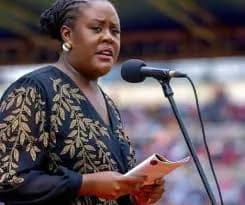
Why Winnie Odinga Has Softened Her Stand Against Ruto, Oburu
For years, Winnie Odinga cultivated a reputation as one of the most fearless and outspoken political voices within the Orange Democratic Movement (ODM). As the daughter of the late former Prime Minister Raila Odinga, many expected her to tread cautiously—mindful of family ties, party elders, and entrenched power structures. Instead, Winnie chose confrontation over caution, carving out an independent political identity that frequently placed her at odds with ODM’s top leadership, including her uncle, Oburu Odinga.
Her political posture was unmistakably defiant. Winnie emerged as one of the strongest critics of Oburu Odinga’s leadership of ODM, openly questioning both the legitimacy of his ascension and his suitability to guide the party during a delicate political transition. She argued that Oburu had been hurriedly imposed on the party by a small inner circle, bypassing the National Delegates Convention (NDC)—which she insisted was the party’s supreme decision-making organ. To Winnie, this was not merely a procedural oversight but a fundamental betrayal of ODM’s democratic ethos.
Beyond leadership questions, Winnie took an equally firm stand against the idea of expelling or marginalizing so-called “ODM rebels.” She openly defended outspoken figures such as Nairobi Senator Edwin Sifuna and Embakasi East MP Babu Owino, arguing that ODM’s strength lay in ideological diversity rather than enforced conformity. Purging dissenting voices, she warned, would hollow out the party and alienate its youthful, reform-minded base.
That tension came to a head during a high-profile ODM meeting in Mombasa, where Winnie reportedly challenged Oburu’s authority in a heated exchange. Oburu’s response—dismissing the standoff as a “family matter” to be resolved at home—laid bare the uneasy overlap between family, party, and power that has long characterized ODM politics.
Outside formal party forums, Winnie continued to assert her independence. Together with her brother, Raila Odinga Jr., she organized a massive rally in Kibera that drew large crowds. Political observers interpreted the event as more than a show of popularity; it was widely viewed as a signal that Winnie was cultivating an independent political base, potentially positioning herself as a future political force beyond ODM’s traditional power centers.
Equally significant was her firm opposition to ODM’s cooperation with President William Ruto’s government. Winnie argued that ODM should remain a principled opposition party rather than align itself with a government it had fiercely contested at the ballot. In her view, compromise risked ideological dilution and long-term political confusion.
Then, something changed.
In recent months, Winnie Odinga’s tone shifted noticeably. Her sharp criticism of President Ruto softened. Her attacks on Oburu Odinga faded. The fiery rhetoric that once defined her political brand gave way to measured language, restraint, and calls for unity.
The turning point, many believe, was the appointment of her mother, Ida Odinga, to a position at the United Nations Environment Programme (UNEP). While widely celebrated, the appointment altered political dynamics within ODM in ways that were impossible to ignore.
Following the appointment, Winnie delivered a speech that marked a clear departure from her earlier positions. She avoided direct confrontation with the Ruto administration or ODM leadership, opting instead for conciliatory language. Senior ODM figures, including Homa Bay Governor Gladys Wanga, praised her remarks, with Wanga noting that Winnie had demonstrated “wisdom.”
Soon after, Oburu Odinga revealed that a family meeting had taken place, during which Winnie reportedly apologized for her earlier remarks against both him and President Ruto. The family, he said, resolved to support the broad-based government. Oburu even hinted at further political accommodation, stating that he would speak to President Ruto about “giving her a job”—a remark that underscored the transactional undertones of Kenyan politics.
Speaking to this reporter, prominent political analyst Javas Bigambo offers a broader interpretation; one that frames Winnie’s shift less as betrayal and more as political realism.
“Politics is naturally driven by interests,” Bigambo argues. “When those interests are met—or appear likely to be met—alignment comes naturally.” According to him, Winnie has had to confront a political reality shaped not just by present circumstances but by legacy. Raila Odinga, he notes, passed on at a time when he had already endorsed the broad-based government and was working with President Ruto.
“In that context,” Bigambo explains, “the most natural thing for Winnie Odinga is to stay aligned, stabilize her political position, and then navigate future direction from a position of security rather than perpetual confrontation.”
This perspective reframes Winnie’s apparent retreat not necessarily as ideological surrender, but as strategic recalibration—one rooted in continuity, family legacy, and political survival. Yet even within that logic, the optics remain problematic.
Suddenly, President Ruto—once framed as an ideological adversary—appears more acceptable. The democratic grievances that once animated Winnie’s opposition seem less urgent. For critics, this reinforces the belief that in Kenyan politics, principles are flexible when power, access, and appointments enter the equation.
President Ruto, for his part, emerges as the chief beneficiary. By extending an olive branch through Ida Odinga’s UNEP appointment, he effectively cooled internal dissent within ODM, strengthened the narrative of a broad-based government, and weakened resistance from within the opposition. It was a calculated move with significant political returns.
The consequences are already visible. Winnie Odinga is now expected to rally behind her uncle and support the broad-based government—potentially alienating former allies such as Sifuna and Babu Owino, whom she once defended as voices of reform.
Ultimately, this episode exposes a familiar truth in Kenyan politics: ideology often yields to alignment, legacy, and opportunity. Principles hold firm—until circumstances change.
Whether Winnie Odinga’s shift reflects political maturity, strategic compromise, or contradiction will only become clear with time. What is undeniable, however, is that Ida Odinga’s UNEP appointment has reshaped the political chessboard—once again proving that in Kenyan politics, nothing alters loyalties faster than a well-timed appointment.
Silas Nyamweya is a Journalist and Social Scientist based in Nairobi
Loading comments...
Related Stories
Explore More Topics
No topics available at the moment