

THE NATURE OF CONSCIOUSNESS. What the ancient traditions knew about the Mind
The Nature of Consciousness
What Ancient Traditions Knew About the Mind
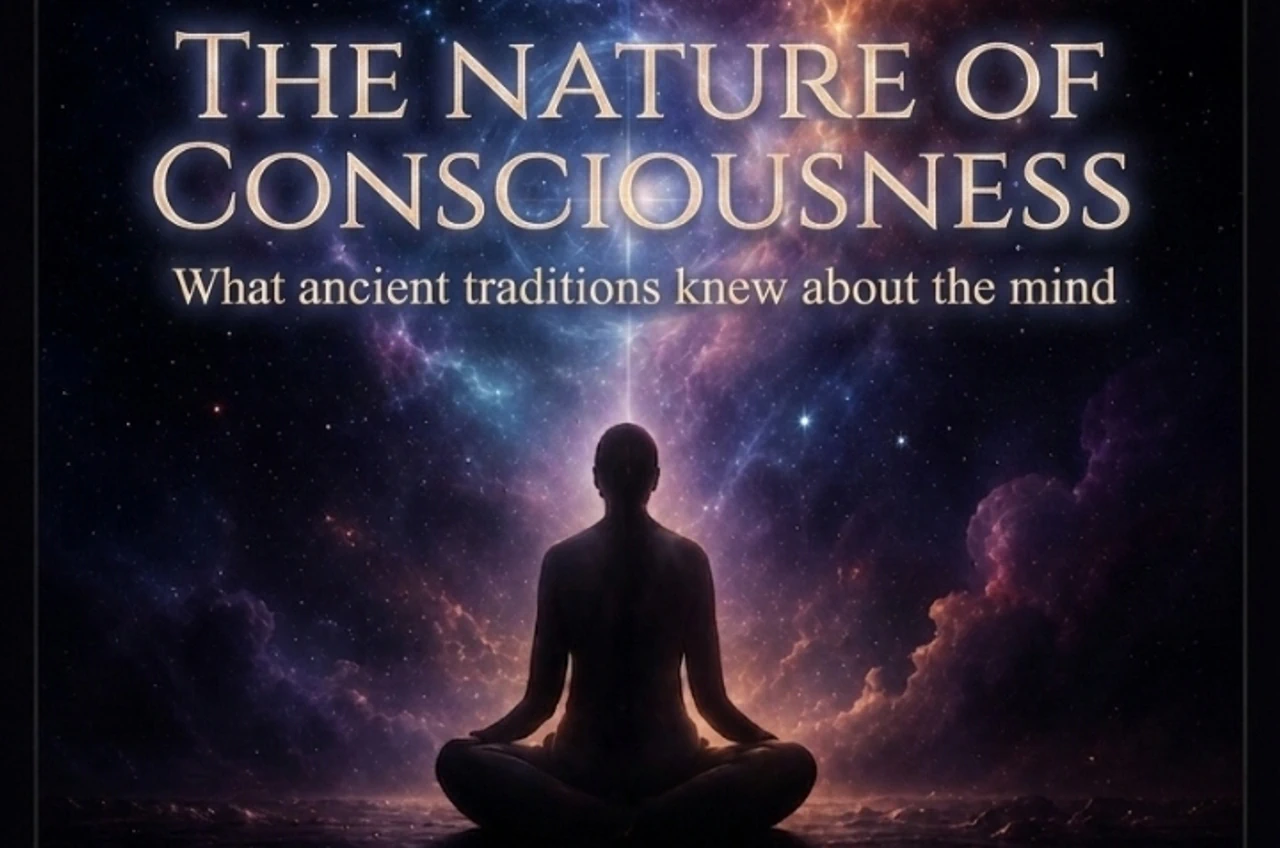
The image of a silent figure sitting beneath the vast cosmic sky captures one of humanity’s oldest and deepest questions: What is consciousness? Across thousands of years, ancient traditions from Egypt, India, Greece, Tibet, China, and mystical Judaism attempted to understand the mysterious force behind awareness itself. Long before neuroscience, psychology, or quantum theories emerged, sages and mystics explored consciousness through meditation, contemplation, dreams, symbols, ritual, and direct inner experience.
At the center of this title lies a profound idea: consciousness is not merely the activity of the brain, but the very foundation of human existence. Ancient traditions did not view the mind as a machine producing awareness. Instead, they often believed awareness existed prior to thought, prior even to identity. The mind was seen as an instrument, while consciousness was the observer using it.
Modern society tends to identify the self with thoughts, memories, emotions, and personality. Ancient wisdom traditions challenged this assumption. They asked: Who is the one observing these thoughts? If emotions change, if the body changes, and even beliefs change, what remains constant? Their answer was that beneath the restless surface of the mind exists a deeper layer of awareness so silent, eternal, and connected to the greater fabric of reality.
In the Indian Vedic and Yogic traditions, consciousness was called Atman, the divine self within. The ancient Upanishads taught that the deepest self is not separate from the universe but identical to the ultimate reality known as Brahman. This was a revolutionary understanding. It meant that human consciousness is not isolated. Every individual mind is like a wave emerging from the same infinite ocean of awareness. Meditation was therefore not simply relaxation; it was a method of dissolving illusion and returning to the recognition of unity.
Buddhist traditions approached consciousness differently yet arrived at equally profound conclusions. Buddhism taught that the ordinary mind creates suffering because it clings to identities, desires, fears, and attachments. Through mindfulness and deep meditation, practitioners discovered that thoughts are temporary phenomena...
Loading comments...
Related Stories
Explore More Topics
No topics available at the moment